Pages

Thursday, August 07, 2014

Kenya: Kids

The children at Made In The Streets are inspiring. The younger children are learning basic literacy, math, communications, science, Bible and some other subjects while the older children are learning a trade: woodworking, fashion and design, catering, beauty and hair, or farming. They are being prepared with useful and marketable skills for their local economy. With these skills, these children who were formerly on the streets fighting to survive will be situated to thrive.
IMG_7723
I like Antony’s smile and sly sense of humor.


IMG_7779
Jane gave me my first ever pedicure. This girl is going to make it. She is good at what she does and is savvy in her marketing.


IMG_6557IMG_6335
Lydia and Lucy are both such sweet and beautiful young women. Their hearts are deep and they have a lot of love to give.

IMG_7686
Ambush is his name and he graduated last year and is working in the Nairobi fashion industry. He came back to MITS for a day to speak with current skills students on what it is like to graduate, get a job and live on your own. He is an inspiration to the current students, but also to the MITS staff and the visiting team.

IMG_6483
Sylvester has such a welcoming smile and servant’s heart. He was found helping out frequently.

IMG_7671IMG_6355
One of the great joys of this trip was to have my mother join us. It was a dream come true as I recall when I was a children she would speak about how wonderful it would be to do mission work in Africa. Well, it took a few decades, but here is evidence of a dream fulfilled.

Mom got tagged as “Sho Sho Linda,” which means Grandma Linda. The children took to her. Being from the streets, these children had little or no contact with their grandmothers. There is a grandmother void for these kids and my mother was glad to put a little something of herself into that void.
IMG_7681
I had the privilege to teach a class to many of the older students to help them prepare to launch out into the world.

IMG_6566
Children of all ages of all nations like to  play

IMG_7005

and to be silly

IMG_6495

and to be held. it should be stated that this little guy has the look on his face that we saw more than once. It is his fake "I am not having fun face." He was loving the attention he got from Sierra and LOVED HIM SOME IPHONE.

One of the most amazing things to ponder is how the street children of Eastleigh, with their painfully filthy living conditions, glued addicted stupor, and withering poverty can turn into healthy and smiling children poised for success in life. Having seen face to face both street children and MITS children, there is no better measure of the transformational work of this mission and how God uses people to lift people.

Wednesday, August 06, 2014

Kenya: Eastleigh

IMG_6894

In two previous posts I talked about Methare Valley (here and here). Another place in Nairbo where Made In The Streets has a presence is in the Nairobi suburb of Eastleigh.

Methare Valley and Eastleigh have poverty in common, but there are many differences. Eastleigh is both more and less developed than Methare Valley. Eastleigh is not a slum, but s run down suburb where poverty has come in and run amuck. There are multi-story buildings in varying stages of either development or dilapidation in Eastleigh as opposed to the random, make-shift housing units cobbled together in Mathare Valley.

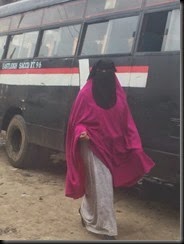
Another difference is that Eastleigh has a much more overt Muslim presence than Methare Valley. There are Muslim places of worship, more Muslim dress, and much more signage in Arabic.
IMG_6918Eastleigh is “home” to many street children whereas there are no street children in Methare Valley. In fact, street children in Methare Valley end up in Easleigh.

Our visit to Eastleigh involved base-walking, which means meeting the street children at their bases. A base is simply a location where street IMG_6900
children gather. It is usually identifiable by a small lean-to or unique land formation. To them it is home. When we came up upon our first base, I did not even know it was a base. It just looked like children sitting together, high on glue. Larry Conway guided our base-walking group through some basics of base-walking. As we approached the children, Larry and Moses took lead and helped our group engage with the group of children. Moses translated between English and Swahili.

We all introduced ourselves and they themselves. I was surprised they were so eager to listen. What I found out later was that street children are either feared as dangerous by locals or are invisible to locals. In short, no one bothers to talk with them. So, when Mzungus (white people) bother to stop, they are at least curious and sometimes eager as it might mean help.

This was a base that had been visited by Larry and Moses and others before, so there was some pre-existing familiarity. Larry, in both English and Swahili, ,asked who would like to say a prayer to start our conversation. It was an unexpected move so far as I was concerned. Then what come next was even more unexpected. One of the boys at the base base pointed directly at me and said, “you.” Then everyone looked at me. I looked around at everyone looking at me with the expectant looks on their faces. What else could I do? I began to pray. Moses interpreted.

We spent about 20 minutes at the base sharing scripture and stories and the boys at the base listened much more than I could have ever imagined. Perhaps they were really engaged. Perhaps they were so high on glue that they didn’t have the will to do anything else. Perhaps they thought they were going to get food. It is really hard to tell.

Then it was time to close it out and visit another base. Larry asked the boys which one of them would close us off in prayer. Again, it was unexpected. Then one of the boys stepped up and volunteered to pray. Dirty, covered in flies, glue bottles shoved in his left from pocket, he stood to pray.

His prayer maneuvered past all of my defenses and put me to tears. He prayer for us, for our safety, for protection for others, for all kinds of selfless things. His prayer was coherent, compassionate, and unselfish. How could a glue addicted street kid put together such a prayer.

It occurred to me that he is living in two worlds. He depends on glue and he depends on God. He is in squalor and abject poverty and has a wealth spiritual access. He is broken and he is whole.

But my tears. What was it about his prayer that squeezed my heart? Later I figured it out. I felt deep within me that as different as our life circumstances are, there is no difference between us. He has a glue bottle shoved in his pocket that I  can clearly see, but what “glue bottle” do I have shoved into my pocket? What do I rely on when I should have faith?

I entered the base walk to engage with people so different from me and left with the disconcerting and generous understanding that our differences are overwhelmed by our similarities.
IMG_6901

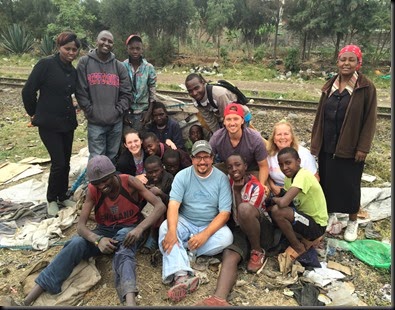
These glue addicted children on the streets of Eastleigh are in process, just like I am. They are loved by God no less and no more than I am loved by God. We have our own types of poverty and our own types of wealth. We engage and share in each other’s poverty and share in each other’s wealth. And we hope and we pray and we never give up.

IMG_6916

League of Extraordinary MFTs

It happened. For real. Last night a dream that began three years ago came into its complete fullness. The first cohort of MFT students has left the nest and now go into the world to practice the profession they have been rigorously studying for two years. It’s humbling. It’s exciting. It’s beautiful.

Three years ago, when the program was nothing more than an idea, I was reluctant even to consider engaging in it. I had completed my first year of being a new university professor and felt like I needed a couple more years to get my footing. Not only that, the idea was not even mine. I was simply asked to help out.

Well, little did I know that helping would become lots of helping, and lots of helping would become leading, and lots of leading would become being the director of the program. Before I knew it, I was in charge of everything.

Two years ago I met the first cohort at the initial orientation in a downstairs conference room in the student center. I was impressed at the first meeting and eager to get started. I decided to be bold and to challenge them that this program would be rigorous and that they would need their cohort to “cooperate to graduate.” I made promises about quality and rigor and how well prepared they would be by the time they graduated – promises I knew I had to find a way to keep.

My words were not based on any evidence whatsoever. I had no idea what was really going to happen. I wondered whether it would even work. We were working on the curriculum as we went, I was the only full time faculty, we did not have an onsite clinic nor did we have any identified clinical sites. In an ideal world, we would have had another entire year to prepare for the roll out of the program. We had no such luxury. We sailed the ship as we built it.

Looking back after two years, I see that the ship sailed all the way to from one shore to the next – no one fell out and no one drown. More than that, 15 students thrived and excelled and succeeded beyond my most optimistic dream.

There are now 15 graduates, a league of extraordinary MFTs, who will:

  • Take the next step in their MFT profession.
  • Provide excellent therapy for hundreds and hundreds of individuals, couples and families who need help.
  • Advance in the profession and make it a better profession.
  • Continue to grow and develop in their own relationships.

So, Aron, Jen, Jenny, Jeanetta, AnnChristine, Adella, Siobhan, Amanda, Nathan, Marcus, Nikki, Bekah, Drea, Juli, and Alyssa, you are amazing. You are forever etched into my life – unforgettable. You are the newest and most promising face of this profession and the field of MFT. You now take you place in this sacred work and will shape this profession in middle Tennessee, in California, in Pennsylvania and wherever else your life journey takes you.

I am proud of every single one of you. I am proud to say you were trained at Lipscomb. I am proud to say that I got to be  involved in your training as an MFT. I am honored and humbled that I got to  be involved in your lives so deeply. I cannot wait for the opportunity to say, “that MFT was trained at Lipscomb,” because the reputation of this program is tied to your excellence – and you are excellent!

May God continue to unleash blessing in and through you so you can continue to bless the world.

Tuesday, August 05, 2014

Kenya: Methare Valley (Where is God?)

In my last post I shared a bit about the slum of Merthare Valley in Nairobi where half a million people live. It is a place of contrasts with poverty as a main feature, and yet seasoned with beauty, redemptive smiles of children, and a thin but active economy.
When we first approached Methare Valley in our bus, all I saw was squalor. Lines of abandoned cars covered in dust, trash piled up with old men and children picking through it looking for something valuable, people standing around with seemingly nothing to do – the place looked like what depression feels like. I tried to imagine what it was like living there and my heart sank. I wondered, “Where is God?”
This question that emerges in the midst sprawling poverty, “where is God?” is exposing…of my own spiritual poverty. My immediate assumptions about Methare Valley and poverty and God had immediate implications. Although I did not overtly think this, the assumption supporting my question was that God cannot be where economic poverty is. In short, I was unwittingly admitting that I am much more beholden to the Joel Osteen style prosperity gospel than I would like to admit.
osteen
This is embarrassing since I am such a critic of this false teaching. To make the automatic assumption that economic conditions are some indicator light for the presence of God IS THE PROSPERITY GOSPEL!. Of course God is in Methare Valley. God is as much in Methare Valley as He is in my middle class neighborhood in Tennessee, the monasteries of Kentucky, Wall Street, or anywhere else. God does not play favorites and prove who is “blessed” by money.
When I looked to that which contrasted the poverty, I saw God. In the smiles of children, the the families that were still in tact, in the neighborly way people looked out for each other, in hospitable and welcoming spirit people had, in the lack of complaint for their situation – there is life in the slums. Slum churches were vibrant a live in their dark ramshackle structures. In the midst of economic poverty, life emerges, it presses through, and it is even thrives. Like flowers grow through the cracks of pavement, life presses through the pavement of poverty.
God does save people in the poverty of Methare Valley, but God also saves people in the poverty of Wall Street.  The way God saves people usually has nothing to do with how much money they have. People saved out of effects of economic poverty of Methare Valley might never get rich while people saved out of the moral poverty of Wall Street might always be rich. There is no necessary correlation.
There is a life and depth of spirituality alive and well in Methare Valley that I do not have access to in middle Tennessee. There is constant faith for provision that I simply do not consider on a day to day basis. I must purge the prosperity gospel that has a greater hold on me than I want to admit and notice that my confidence in things has so comforted me that I have replaced faith in God with the reliability of the good infrastructure.

Where is God in Methare Valley? When I was there, God was busy - very busy. And one of the things he was doing was undoing layers of internalized bad theology in me.

Monday, August 04, 2014

Kenya: Methare Valley

IMG_2562
Methare Valley is a sprawling slum in Nairobi. Half a million people live in this slum. Narrow zig-zag pathways snake between endless ramshackle, make-shift metal housing units where ducks, chickens, and goats lap sewage water that runs in sometimes random places. Low hanging power lines link across the zig-zag pathways and water trickles in the cracks on the ground as you walk creating a constant hazard.
There are far fewer actual roads than the population density requires and the roads are poorly kept. It feels disorganized, unplanned, and uncontrolled. Forget about zoning and HOA rules. This place feels like a free for all. Poverty closes in on all sides as the slum stretches for as far as the eye can see.
The main road passing through the slum bustles with activity. Venders selling their wares and food fill the streets, some of the very engaging and some aggressive as they seek to make a day’s wage. If they can make a couple dollars, they have had a good day. One person cooked french fries over an open fire in the street. They looked pretty good, but I passed by not giving in the temptation.
IMG_6409


The smells of the slum were a strange mix of delicious food, raw sewage, and diesel exhaust. The smells were pungent and savory all at once and there was the slight feel of carnival excitement. It appeared as though the smells were invisible to the locals, but what was not invisible to the locals was our group of white Americans walking through the slum.
IMG_6412
 
In the midst of the immense poverty, there was beauty. The beautiful children with smiles on their faces played in the streets perhaps oblivious to the extent of their poverty.
IMG_6444IMG_6443
Young women with habits looking like nuns enjoyed delicious popsicles as they walked down the street after Sunday worship.
IMG_6457
The main focus of our visit was to go with a Made In The Streets staff member named Jackton to visit his father, who still lives in the valley. He lived in a very small place situated deep into the valley. Snaking between the puzzled together houses made it impossible for a newcomer to have any idea how anyone could know how to get there get there or how to get out. All 15 of us found a way to squeeze into the home of Jackton’s father, a space no larger than my bedroom. He told us stories of living in the valley, how he worked as a mechanic, and how his wife lived in the up country on their land in order to protect it from thieves.
IMG_2451
Many of the children who are at Made In The Streets once lived in the valley. It is a place they call home and it is filled with a strange mix of memories for them, some good and some bad, just like the mix of smells.
It is overwhelming and humbling to walk through Methare Valley. In one sense it feels hopeless. How could there ever be enough economic input the lift this slum from the withering poverty? On the other hand, it appears that for many of the people there, the poverty is more of a problem for me than it is for them. Regardless, the experience in the valley felt like both a gift and an indictment. It forced me to understand myself outside of my most common context, to be in a place where I know that the social forces of poverty are so far beyond the power I have to change it that my own sense of power diminished to some more appropriate level. My privilege became as obvious to me as the color of my skin walking the streets.

Sunday, August 03, 2014

Kenya: Teaching

Of the many roles I took on in my time in Kenya, teaching was one of the primary roles. I had two teaching situations: staff and students.
Staff Seminar. For the staff I conducted a 4 hour seminar on trauma and resilience. The purpose of this training was to help the Made in The Streets staff become more familiar with indicators of trauma as well as reinforce community processes that promote resilience in individuals. The focus on community processes was intentional because African culture is much more communal in its assumptions as opposed to individualistic.
The staff received the seminar well. I was not surprised that they were such quick studies on the material as it related to the MITS students, but what did take me off guard some was how readily they applied the material to their own lives. A decent percentage of the staff were once street children themselves. For some of the staff, along with the incredible work they do for the children comes reminders of their own difficult past. It was a great joy of mine to get to affirm what they are already doing right for the students and themselves as well as introduce them to some new and useful concepts.
Student class. I got spend several one hour class periods with the older students discussing their lives in the past, the present and the future. The goal was to get them to imagine a good and successful future, anticipating their success and potential challenges.
The students received the information well and engaged in the role play.

Teaching in a cross-cultural setting has its challenges. Even though the staff and children speak English, that does not guarantee shared meaning. One thing I learned is that English has a much more robust emotional vocabulary than does Swahili and also the tribal languages. So, when asking for emotional expression in words, what I am also asking is for the students and staff to go to their third language to find those words as I am monolingual (blush - shame). The problem is that when multi-lingual people express emotions verbally, their native tongue is most accessible to them, but the language most accessible is significantly void of emotional vocabulary. It is a challenge.

All in all, my teaching role went well and I was pleased with the outcomes. At the same time, if I get to go back and do it again, I believe I will make some changes and engage with more experiential opportunities.

Saturday, August 02, 2014

Kenya: In General

The trip to Made In The Streets in Kenya was nothing short of amazing. There were so many things that happened that capturing it all at once is going to be impossible.
I am incredibly grateful to the over 3 dozen people who supported us financially and the many more who supported us in prayer. Thanks to all the people in Kenya who welcomed us, hosted us, made space for us, and shared their lives with us.
Although there are so many different ways to understand the time in Kenya, I try to clump the experiences into something I an put a name to. Here are the categories of things that happened:
1. Teaching
2. Methare Valley
3. Methare Valley (Where is God?)
4. Eastleigh
5. MITS kids
6. MITS Staff
7. Kenya Life
8. Safari
It is my hope to get the opportunity over the next few days to write on each of these topics.

Sunday, July 06, 2014

Is the Bible without error?

The Bible is the most printed book in the history of the world. This will likely be the case for a long time. There are many claims about this much printed and much read Bible that are made ranging from “the Bible is perfect and without error” to “the Bible is creative writing project filled with made up stories with questionable literary value.”

I come to this conversation as a Christian, but not as an expert on ancient texts. So my claims are my own and do not rest on extensive research or scholarly reflection. They come from being a reader of the Bible, a believer, and a community of faith. I have taken college level courses studying scripture and even a course on how to read and interpret the Bible. But I come as a regular to this conversation.
I believe that the Bible has errors in it and that it is without error. And so, as you can clearly see, I have a problem on my hands as I am holding together two views of the Bible – each seemingly not allowing the other to exist.

I guess a metaphor is in order here. Any great work of art, whether the statue of David, the Mona Lisa, or any other revered work or art is in one sense perfect as it is. David is in one sense without error. And yet in another sense if you were to inspect the statue, it has errors. It has imperfections in it.

However, what we are talking about is error on two significantly different levels of observation. A nick in the statue is an error, but it does not compromise the authenticity of the statue. A scribal error or New Testament reference of the the Old Testament that is inexact does not destroy the authenticity of the Bible. The reality is that a document written by many different people over many different centuries in an array of different cultures translated into thousands of different languages is going to have some errors in it.

And here is the place where Christian fundamentalists set themselves up for serious problems. When errors in the Bible are pointed out by someone, their response has to be either denial of the error or loss of faith – or a softening of their fundamentalism.  When fundamentalists hinge faith and even salvation on the Bible being errorless at every single point on every single level, skeptics listen and follow the fundamentalist rules. When a skeptic follows the fundamentalist rules of the  Bible, there is no compelling reason for skeptics to part with their skepticism. There are what appear to be errors.

And when that is the focus of the conversation, it is easy to bring that conversation to a close. If we set up an error hunt, that is just too easy. If we were to judge the Statue of David by whether there was a single flaw anywhere in it, then we would miss the beauty of the statue itself. If we set up the rules of good art as being without a single error, then we can conclude that the Statue of David is not really a statue or not really art at all. No one does this with art.

The way I understand it is that scripture is errorless in its story, not its detail. The story of a creative God who created love and freedom and wrapped it in flesh that was a refection of God and set a physical context for love and freedom to play out over a thing labeled as time is at least compelling. Then, to engage that creative expression relationally when love and freedom waned and were at risk for being eliminated, is at least beautiful. Then for this God to engage even more closely, to actually become one of the created and to live a life of freedom and love is at least intriguing. Then for that God-human, out of love and freedom, to lovingly and freely surrender to hate and oppression for the sake of demonstrating that love and freedom are more powerful than hate and oppression, allow himself to be killed is at least shocking. Then for this God-human to overturn death to show love and freedom are what last beyond the worst hate and oppression have to offer is at least inspirational. Then for that God-human to start a movement of people intended to live love and freedom in community that is both now and on the other side of death is at least hopeful.

The story is errorless regardless of whatever errors may be in it. If faith hinges on inerrancy with every little grammatical mark, then the Bible is hopeless – as is everything else in all of life. If it hinges on the story, then the Bible has much to offer humanity. I would argue, it offers a story so beautiful that it is roomy enough for truth.

Thursday, July 03, 2014

Second Hand Smoke

I waited for you

To finish your cigarette

Another drag

Another orange swell 


And everything we ever dreamed of

Had to wait


I waited for you 

To cough it up

Another hack

Another lung convulsion


And everything we ever dreamed of

Had to change


I waited for you 

To catch your breath

Another bench rest 

Another thick wheeze


And everything we ever dreamed of 

Faded on the horizon 


I waited for you

To recover from chemo

Another iv

Another lethargic day


And everything we ever dreamed of

Had to happen in the next 6 months


I waited for you

To jump out of the casket

Another joke?

Another disappointment.


And everything we ever dreamed of

Had to stay buried in my heart 


Monday, June 30, 2014

Stumblefriends

We come stumbling,
No matter how planned,
Into this life
And stumble throughout
Like children not watching
Where they are going,
Like teens texting
While crossing the street,
We gaze into the future,
That fabricated gonna-be,
And we walk
And we stumble
Because we cannot see
Because we are little
Because walking lessons
Were made for toddlers

We cannot avoid stumbling
But we can stumble together
We're stumblefriends -
If you friend me
I'll friend you
And we'll fall all over each other
We'll fall forward
You and me and gravity
Finding and fabricating
The most beautiful future